Monday, 19 January 2015

HA4 Task 2 CV

Task 2
CV


HA4 Task 1 Portfolio

Task 1
Portfolio
Create a portfolio of your work from the units you have completed this year. You only need to include the final outcome for each assignment. This may involve artwork, animation, screen capture, sound files and presentations. Make sure that you use headings to make it clear which unit and assignment the work you are presenting relates to. This is your chance to reflect on what you have achieved. You will also be able to evaluate what your strengths and weaknesses are and what you did and didn't enjoy.

You are aiming to prepare personal career development material to a quality that reflects near professional standards consistently using correct formal language.

Unit 73: 

Illustration of Arnold Schwarzenegger

Illustrator of my Avatar.

Photoshop of a clock which I had to clear up.


Photoshop - Sticking the missing pieces together.


Photoshop - Sticking the pieces together by cropping and rotating.


This was made in Photoshop, where I had to remove certain things and replace them with  material already on the image.


Tuesday, 6 January 2015

HA3 Task 7 Professional Bodies Supporting the Industry

UKIE:

UKIE has been a driving force in helping shape the voice of the UK  games industry and has ensured the industry is represented at the highest levels of government. 


IGDA:


The International Game Developers Association (IGDA) is the largest non-profit membership organization in the world serving all individuals who create games.

IGDA wrote this paragraph to describe themselves:

As an international organization, we are a global network of collaborative projects and communities comprised of individuals from all fields of game development - from programmers and producers to writers, artists, QA and localization. We bring together developers at key industry conferences, in over 90 Chapters and in Special Interest Groups (SIGs) to improve their lives and their craft. We advocate on behalf of our membership to ensure quality of life, perpetuation of our craft and preparing the next generation of developers.Whether you're a student with a goal to become a game developer or a seasoned veteran, regardless if you're based in the U.S. or any country/region in the world, whether you're an indie developer or in a AAA studio, whether your primary platform is a PC, console or a tabletop - we welcome you home to the IGDA!


Women in Games:

Mission Statement

Highlight academic and industrial perspectives on groundbreaking work in computer games research, games development and games education. Focus attention on issues of special interest to women in the games industry and through this seek to address the games industry's gender imbalance and develop a fuller understanding of games and game playing.

Aims

1. Give a voice to women and men in the games industry and in games education with interests in supporting
    and encouraging the role of women in the games industry.
2. Support and disseminate research into games, games culture, games education, games industry, games 
    technologies, and other game related areas, especially (but not exclusively) with reference to the
    experience of women playing, developing and responding to games and game culture.
3. Provide networking opportunities for women and men working in the games industry and researching game
    related areas.

Objectives

1. Hold regular Women in Games conferences and events.
2. Support events and conferences that promote the Women in Games aims.
3. Provide information and relevant links on the Women in Games website.
4. Provide online opportunities (forum/blog) for Women in Games related discussions and dissemination of
    ideas.
5. Support individuals and projects that further the Women in Games aims. 
BAFTA: 
The British Academy of Film and Television Arts is an independent charity that supports, develops and promotes the art forms of the moving image by identifying and rewarding excellence, inspiring practitioners and benefiting the public.
In addition to its Awards ceremonies, BAFTA has a year-round, international programme of learning events and initiatives that offers unique access to some of the world’s most inspiring talent through workshops, masterclasses, scholarships, lectures and mentoring schemes, connecting with audiences of all ages and backgrounds across the UK, Los Angeles and New York.
BAFTA relies on income from membership subscriptions, individual donations, trusts, foundations and corporate partnerships to support its ongoing outreach work. 

MEF: 
MEF is the global trade association for companies wishing to monetize their products & services via mobile. Headquartered in London with operational chapters and offices in Asia, EMEA, Latin America, Middle East, Africa and North America, MEF is a member network with international reach and strong local representation; ideally placed to drive market growth. Established in 2000, MEF represents the total mobile ecosystem providing an impartial and powerful voice for pioneering companies from across the mobile content and commerce value chain.


HA3 Task 6 Legal and Ethical Obligations

Copyright:


Copyright is a legal right created by the law of a country, that grants the creator of an original work exclusive rights to its use and distribution, usually for a limited time, with the intention of enabling the creator (e.g. the photographer of a photograph or the author of a book) to receive compensation for their intellectual effort.
Copyright is a form of intellectual property, applicable to any expressed representation of a creative work. It is often shared among multiple authors, each of whom holds a set of rights to use or license the work, and who are commonly referred to as rights holders. These rights frequently include reproduction, control over derivative works, distribution,public performance, and "moral rights" such as attribution.
Copyrighted material is identified by this symbol. 
(http://en.wikipedia.org/wiki/Copyright)
For example, the Call of Duty Modern Warfare 2 is owned by Activision and Infinity Ward, so no other company has right to use the name for their own game. 


Trademark:
trademark is a recognizable signdesign or expression which identifies products or services of a particular source from those of others.The trademark owner can be an individual, business organization, or any legal entity. A trademark may be located on a package, a label, a voucher or on the product itself. For the sake of corporate identity trademarks are also being displayed on company buildings.

Patents:

patent is a set of exclusive rights granted by a sovereign state to an inventor or assignee for a limited period of time in exchange for detailed public disclosure of an invention. An invention is a solution to a specific technological problem and is a product or a process.


Registered Designs:

A registered design is protection given to the outward appearance of a product or part of product.

Violence:

Violence is behavior involving physical force intended to hurt, damage, or kill someone or something. This is used alot in video games, with many games involving physical violence such as fist fights and using weapons like baseball bats to kill others, to guns used to kill people. 


Rating:

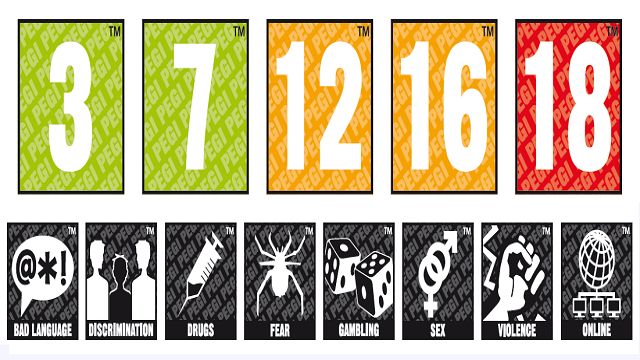
video game content rating system is a system used for the classification of video games into suitability-related groups. Most of these systems are associated with and/or sponsored by a government, and are sometimes part of the local motion picture rating system.

Education:

Education in its general sense is a form of learning in which the knowledgeskillsvaluesbeliefs and habits of a group of people are transferred from one generation to the next through storytelling, discussion, teaching, training, and or research. Education may also include informal transmission of such information from one human being to another.


Stereotyping:

Stereotyping is where you make assumptions about someone usually from first impressions some examples are: A man acts a little feminine, or speaks in a certain tone so he might be stereotyped as a homosexual or someone who dresses in dark clothes has black hair and seems down all the time they might be stereotyped as Emo.

Addiction:

A state characterized by compulsive engagement in rewarding stimuli, despite adverse consequences. If you are addicted to something, you cannot get enough of it so you just want more. 


HA3 Task 5 Contracts of Employment

Contractual:

Contractual is where a project, game or task is sealed by a contract. If the contract is broken, legal actions may be taken on the person or company who broke the contract. The contract can be broken if confidential information is given away which would reveal a companies plans.


Employment:

Employment is where people get employed by a business in a certain department in the company, such as game developer or artist. Employment is also where you are under a state of pay, where you have to do what the employer says and in exchange you get payed. However, you can get 'fired' from a job, which essentially means you get kicked out of the workplace and cant work there anymore if you aren't working hard enough, constantly turn up late or start causing disruptive behavior which distracts other employees or damages the companies reputation. 


Development:

Video game development is the process of creating a video game. Development is undertaken by a game developerwhich may range from one person to a large business. Traditional commercial PC and console games are normally funded by a publisher and take several years to develop. Indie games can take less time and can be produced cheaply by individuals and small developers.

The first video games were developed in the 1950s, but required mainframe computers and were not available to the general public. Commercial game development began in the 1970s with the advent of first generation video game consoles and home computers. Due to low costs and low capabilities of computers, a lone programmer could develop a full game. However, approaching the 21st century, ever-increasing computer processing power and heightened consumer expectations made it difficult for a single developer to produce a mainstream console or PC game. The average price of producing a video game slowly rose from US$1–4 million in 2000 to over $5 million in 2006, then to over $20 million by 2010. However, mobile, web-based and indie games can cost much less.


License:

A license may be granted by a party ("licencor") to another party ("licensee") as an element of an agreement between those parties. A shorthand definition of a license is "an authorization (by the licencor) to use the licensed material (by the licensee)." In the games industry, this basically means a company can use another companies game or create a squeal to that game. 


NDA:

NDA stands for Non-Disclosure Agreement where a person or company agrees not to give out classified material. A non-disclosure agreement (NDA), also known as a confidentiality agreement (CA), confidential disclosure agreement (CDA), proprietary information agreement (PIA), or secrecy agreement (SA), is a legal contract between at least two parties that outlines confidential material, knowledge, or information that the parties wish to share with one another for certain purposes, but wish to restrict access to or by third parties. It is a contract through which the parties agree not to disclose information covered by the agreement. An NDA creates a confidential relationship between the parties to protect any type of confidential and proprietary information or trade secrets. As such, an NDA protects nonpublic business information.
NDAs are commonly signed when two companies, individuals, or other entities (such as partnerships, societies, etc.) are considering doing business and need to understand the processes used in each other's business for the purpose of evaluating the potential business relationship. NDAs can be "mutual", meaning both parties are restricted in their use of the materials provided, or they can restrict the use of material by a single party.


Collaboration:

Collaboration is where 2 companies come together, or collaborate, to create a game together or simply work on a project. Collaboration enables individuals to work together to achieve a defined and common business purpose. It exists in two forms:
  • Synchronous, where everyone interacts in real time, as in online meetings, through instant messaging, or via Skype, and
  • Asynchronous, where the interaction can be time-shifted, as when uploading documents or annotations to shared work-spaces,  or making contributions to a wiki
- See more at: http://www.aiim.org/What-is-Collaboration#sthash.b7xInhyP.dpuf


HA3 Task 4 Industry and Market Trends

Task 4
Industry and Market Trends
Produce an account of the current industry and market trends are within the games industry.

You are aiming to comprehensively explain current market trends in the games industry with reference to elucidated examples. You should be using subject terminology consistently and correctly.

First Person Shooters and Zombies seem to be the center of attention in the gaming industry. For example, Call of Duty is a first person shooter and is also the most popular game franchise of all time and also one of the best selling game franchises of all time. Some Call of Duty games such as the Call of Duty Black Ops series features zombies, which is a fan favorite, and Advanced Warfare, which is the newest title to the franchise, which also features exo-zombies. To date, the the Call of Duty franchise has sold over 100 million copies and grossed over $10 billion.

This video shows a youtuber by the name of TheSyndicateProject playing Call of Duty Zombies.


There are other game franchises that have also made the first person and zombie genres popular. Dead Island is a good example of this, as it has currently released 2 games, Dead Island and Dead Island Riptide, and is expecting a Dead Island 2 to release early 2015. Dead Island itself sold over 5 million copies.

This video shows the introduction to Dead Island, a very popular zombie killing game.

HA3 Task 3 Current Financial Issues

Task 3
Current Financial Issues

Financial planning is important in the games industry as if you do not plan, there is a big chance you will go over budget, causing progress to be lost, and a chance that you may have to find ways to make money, cancel the game or end up having to close your business down due to having no money. 

There can be a variety of financial issues that could occur within the games industry which may prevent the completion of a project for example the business may have though they have got the money to create the project but it turns out they haven’t, which results in the closing of the project unless they can find funding. Another reason may be because the publishers have pulled out because the deadline hasn't been met. This means that the funds stop coming into the project from the publisher funding organisation. When the publishers pull out of a project they will require a fee because of the time the developers have wasted.

Produce an account of why financial planning is so important within the games industry and what the current issues facing the industry are.

You are aiming to comprehensively explain financial issues in the games industry with reference to elucidated examples. You should be using subject terminology consistently and correctly.